
Air Conditioning News

What is Air Conditioning Seasonal Efficiency?

air conditioning seasonal efficiency

Until 2013, the air conditioning industry used a ‘nominal’ ratio for cooling (EER) and heating (COP) but this resulted in a significant gap between predicted performance and what is actually achieved. Nominal efficiency gives an indication of how efficient an air conditioner is when operating at full load in nominal conditions (not often achieved). To rectify this, a more accurate method – the ‘seasonal efficiency’ ratio (SEER) – has been developed, which gives a better measure of the real-life energy efficiency of systems.

The new seasonal energy efficiency ratio (SEER) takes into account a number of factors, which together provide a much more realistic view of energy efficiency in real life conditions, including:

  • Energy performance in different climate zones
  • Efficiency at partial load capacity as well as full load
  • Energy consumption in auxiliary and stand by modes 
  • Different load requirements through the seasons

The new method of rating this energy efficiency is driven by the EU’s Energy Related Products (ErP) Directive which specifies the minimum requirements that manufacturers must integrate into their energy-using products by 2013.

Seasonal Efficiency demands a new rating system for heating and cooling products, which must be used by all air conditioning manufacturers. These are:

  • The Seasonal Energy Efficiency Ratio (SEER) value in cooling 
  • The Seasonal Coefficient of Performance (SCOP) value in heating

SEER and SCOP measure annual energy consumption and efficiency in typical day-to-day use. In the longer term, they take into account temperature fluctuations and standby periods to give a clear and reliable indication of the typical energy efficiency over an entire heating or cooling season.

When purchasing your new or replacement air conditioning systems, ask your installer about complying with the ErP.  As a result, they are more energy efficient and therefore emit fewer CO2 emissions.

What is R22 and how to replace it

This article discusses the biggest change ever to affect the air conditioning and refrigeration industry. Under EC Ozone Regulation member states have obligations to halt damage to the ozone layer by phasing out ozone depleting substances. The process began in the 1990s and largely concludes at the end of 2014. This article specifically discusses one of the most commonly used refrigerant gases that is being phased out – R22.

Why is R22 being phased out?

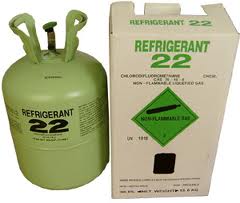
What is R22Systems using modern refrigerants use approximately 40% less energy to heat and cool than older systems using refrigerants such as R22. Also, R22 refrigerant is proven to directly deplete the ozone and hence is bad for the environment.

So there are very good reasons for moving away from this and similar gases. In fact, since 2010, new European legislation prevents any new supplies of this gas from being made, leaving only a declining supply of recycled gas available for air conditioning servicing and repairs. At the end of 2014, you will no longer be able to use even recycled stocks in air conditioning systems. Therefore, air conditioning equipment using R22 after this date will be classed as ‘Not Serviceable’. Even before this date, they are becoming increasingly costly to repair, with both reclaimed R22 and spares being harder to obtain and at higher prices.

The problems with modern refrigerants:

Despite the energy efficiency and ozone benefits of modern refrigeration gases, they do have two major flaws:

  1. Although they do not contribute to depletion of the ozone layer like R22, they still contribute to global warming if not closely controlled. This is why F-Gas regulations were introduced to enforce safe use of these refrigerants, preventing discharge of potentially harmful gases into the atmosphere. Amongst other things, these regulations stipulate mandatory maintenance records for refrigerant plant.
  2. Secondly, and the main reason for this article, modern refrigerants cannot be easily retro-fitted into older refrigeration equipment. The properties of these gas do not closely resemble R22 in terms operating temperatures and require major changes to equipment in order to operate.


So what are my R22 replacement options

Businesses with equipment using R22 refrigerant should begin to plan its phase out now – it is not optional. There are a number decision factors to consider:

Plant Age - an old plant should be replaced, but a young plant might be suitable for modification to an alternative refrigerant. If a plant is already relatively old e.g. >15 years, then plant replacement is likely to be the best option.
Performance – if the plant is known to be inefficient, unreliable or unsuited to the current and future cooling loads then plant replacement is likely to be the best option.
Plant design – some plants are not well suited to refrigerant replacement. You should seeks specialist advice.

Option

Pros

Cons

Replace R22 Plant

  • New plant can be designed to have best energy efficiency.
  • Quick pay back in terms of reduced energy bills.
  • New plant can meet your current and future cooling requirements and use the latest technology.
  • New plant will have 20 to 30 year life.
  • Most expensive option in terms of first cost. Can be minimised in some cases by using existing piping
  • Longest implementation time.

Modify R22 Plant to new refrigerant

  • Fairly quick implementation.
  • Probably much lower capital cost than replacement plant (approx 80% less).
  • Efficiency might get worse (up to 10%).
  • Cooling capacity might fall
  • Not applicable to all plant designs.
  • Some risks of reliability problems and leaks.
  • Plant life not being extended

Continue with existing plant using recycled R22 refrigerants

  • Easy zero capital cost option.
  • Avoids being an “early mover”
  • You can benefit from experience gained on other conversions.
  • New technology options could enter the market prior to 2014.
  • Efficiency not being improved.
  • This Option only delays your response – Option 1 or 2 must be adopted by the end of 2014.
  • There is no guarantee of recycled R22 gas being available at reasonable cost.

 What is involved in modifying R22 Plant to new refrigerant?

A number of refrigerant gases have been specifically designed to aid the transition to modern highly efficient gases. These are ‘blended’ gases that have properties that very closely resemble older gases such as R22. Although these gases don’t have the ozone depleting implications of R22, they also don’t have the energy efficiency benefits of modern gases. They are simply intended to extend the life of existing equipment beyond the ban deadline.

R22 replacement gases

R22 replacement for ….

R417a(DuPont™ ISCEON® MO59)
  • Small A/C (<15kW) systems with a capillary
  • In direct expansion stationary air conditioning
  • Medium temperature refrigeration systems
R422D
(DuPont™ ISCEON® MO29)
  • High, medium and low temperature refrigeration
  • Air conditioning and water chiller systems
  • Selected ‘flooded’ applications
R422A
(DuPont™ ISCEON® MO79 )
  • Cold stores and ice rinks
  • Blends in low-temperature commercial and industrial direct expansion refrigeration systems.
  • Can also be used for medium temperature systems)
R424a
(RS-44)
  • Mobile refrigeration, beverage coolers, water coolers, walk-in coolers
  • Also replaces R411B, R415A and R418A.
R438a
(ISCEON® MO99)
  • Designed specifically for DX water chillers with capacity critical Thermostatic Expansion Valves
  • Gives a satisfactory performance in the majority of DX water chillers.

Replace your air conditioning for free – surely not?

At the end of 2014, R22 refrigerant will be banned under EU legislation. So air conditioning systems with R22 gas will effectively become redundant as any loss of gas cannot be replaced. It is estimated that there are still over 200,000 R22 systems still in operation, but the main reason for companies delaying implementation of R22 replacement programmes is, putting it simply, the cost.

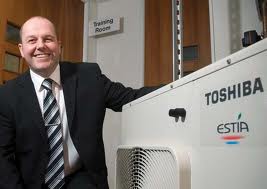
That may be about to change with a revolutionary leasing scheme being launched by Toshiba. This scheme allows businesses to pay for R22 replacement air conditioning equipment from the savings it makes in electricity.

They claim that in most cases there is no cost involved. According to David Dunn, Toshiba Air Conditioning commercial director  “ Toshiba’s new lease scheme enables businesses to replace aging R22 plant with new high efficiency air conditioning in a budget neutral way.”

He goes on to say “The savings in running costs in the vast majority of cases pay for the lease costs on the new equipment, giving up to seven years peace of mind – plus high quality heating and cooling for building occupants.”

As with many of the latest air conditioning systems, the key to the scheme is the use of high efficiency R410A equipment to replace old R22 systems. The new plant uses much less energy to deliver the same cooling and heating to a building, dramatically reducing the user’s energy bills. They claim that in most cases, the monthly saving in running costs will equal the lease costs for the new equipment, making the replacement programme budget neutral.

It is a revolutionary way of not just resolving the R22 headache, but also to encourage commercial companies to reduce their carbon footprint now, rather than waiting until they can afford the capital investment. In many ways, this scheme reflects the ideas proposed in the governments ‘Green Deal’. The government wants businesses to install modern air conditioning (and heating), then pay for it through their electricity bill, based on the savings that are made in electricity. Where the ‘Green Deal’ differs from the Toshiba scheme is that the ‘Green Deal’ proposes that businesses pay back the investment through their electricity bills (see our article How the Governments “Green Deal” affects UK businesses).

In principle we really like what Toshiba are doing here and I very much expect that the other manufacturers will follow suit with schemes of their own. Toshiba have sweetened the deal even further by offering warranties for up to 7 years on the leased equipment, removing uncertainty on servicing and maintenance costs and delivering guaranteed monthly expenditure for budgeting purposes.

Toshiba already reports keen interest in the scheme from a number of major end users operating national estates still dependent on R22-based air conditioning. A key attraction in the current economic climate is that the scheme solves the R22 problem without requiring upfront investment in capital costs. Our only observation at this stage is that the equipment cost of a new installation is often only a 1/3 of the overall cost. So do the lease payments factor in all the other costs associated with a new install – I would expect so, but you will need to read the small print?

There is also a counter argument that it may be worth waiting to see the exact shape and form of the Governments ‘Green Deal’ as it is finalised later in the year. Although, don’t hold your breath – its already been delayed more than once and time is running out to replace those old R22 systems.

Air Conditioning Planning Permission & Listed Building Consent

Planning Permission for air conditioning units.

It used to be that planning permission was commonly required for nearly all forms of air conditioning equipment. The main concerns of planning authorities was around noise and external the appearance of the air conditioning condenser units.

However,  new rules have come into force regarding planning permission for domestic air source heat pumps (i.e. air conditioning units) installations. These new rules mean planning permission will is no longer an issue.

Air source heat pumps will now join the ranks of the likes of solar PV, solar thermal and biomass boilers, and are now classified as a permitted development in England. There is a catch as there a few stipulations and the following criteria must be met:

  • That there is no wind turbine at the property
  • It meets additional criteria if you live in a listed building, in a conservation area or a World Heritage Site
  • The external unit is less than 0.6 m3 in size
  • The unit is more than one metre from the edge of the householder’s property
  • It is not on a pitched roof or near the edge of a flat roof.
  • The noise level must be below 42dB(a) at a position one metre external to the centre point of any door or window to a habitable room of a neighbouring property as measured perpendicular to the plane of the door or window (that was a mouthful).


It is the last point that can be a snag as many air source air conditioners cannot currently meet this and hence unless you have no neighbours, you are still be required to obtain planning permission. So check the manufacturer’s specification before progressing without planning permission.

Full details the legislation can be found here:

http://www.legislation.gov.uk/uksi/2011/2056/made

Listed Building Consent

Planning permission and listed building consent will normally be required to install air conditioning and refrigeration units on the exterior of buildings. Listed building consent may also be required to install units within listed buildings where units would disrupt architectural features and fixtures.

You would be unlikely to get any form of Listed Building consent to install air conditioning condensers located on the front elevation (or any other conspicuous elevation) of buildings, including roofs and the flat roofs of projecting frontages.

Big improvements have been made in recent years to the size of air conditioning external units, so they are a lot smaller and quiter than they used to be. There are even ranges of units that have no external at all. That said, they still have to vent through the wall somewhere and you guessed it, you even need Listed building consent to install ventilation grilles on the front elevation (or any conspicuous elevations).

So, as with all of these things, there are trade off’s so best talk to a specialist before rushing out to buy and self install units such as these in listed buildings.

Building Regulations

Currently, Building Regulation Approval is not required for the installation of air conditioning. Note however, that any associated electrical installation must comply with electrical safety standards.

Landlord’s Consent

If your property is leased, the provisions of your tenancy agreement will almost certainly require you to obtain consent from your landlord before installing building services such as air conditioning. Whilst such consent should not unreasonably be withheld, it is always advisable to consult and gain agreement with your landlord before commencing any air conditioning installation work.

It should also be remembered that your tenancy may require you to restore the property back to its original condition at the end of your lease. In the case of air conditioning, however, this may well enhance the rental value of the property and the landlord may, on this basis, be content to waive the requirement for it to be removed


How to cool hot classrooms

Three quarters of school teachers said classrooms were too hot to work and learn properly in. They have renewed calls for improved government regulations to limit classroom temperatures.

This has been in response to a consultation by the Department of Education on proposed changes to school premises regulations, launched in February 2012. The NASUWT, the largest teaching union in the UK, has called on the government to strengthen rules on both temperature and ventilation.

A temperature monitoring campaign was carried out last June/July across the UK. It revealed that more than three quarters of teachers experienced classroom temperatures in excess of 24°C for more than a quarter of a period. Incredibly, a third experience temperatures exceeding 30°C!

The world health organisation believes any temperatures above 24°C starts to affect productivity and concentration. It is no surprise teachers believe these higher temperatures have an adverse impact on teaching and learning.

Many schools have opted to install air conditioning to cool overheating classrooms and it is considered the best long term solution. But although the cost of this is often not as high as many Headteachers imagine, increased spending cuts have left many schools with very little budget to install such measures. Listed below are some low cost measures which may cool classrooms without the need to invest in air conditioning equipment.

  • Check to see if any heating appliances are switched on in the classroom. A radiator might have been left on and be heating the room without you knowing.
  • Minimise activities that involve movement during the warmest parts of the day, as this creates heat that will build up in the classroom space. For example, if the sun enters the room during the afternoon then do art projects in the morning before the sun enters the room.
  • Keep the classroom doors open. Reduce the heat building up in the classroom by letting it out through the door.
  • Position four electric upright fans around the perimeter of the classroom and point them towards the centre of the room. Set the movement of the fan’s head to oscillating so it rotates from left to right, to cool a larger area of the classroom.
  • Switch off computers, televisions or other heat generating devices that are not being used.
  • Attach blinds onto the windows to provide shade to the classroom. Heat reflective blinds are particularly good at reflecting the sun’s rays back.List Style
  • Create areas of shade in the classroom. Do this by putting large potted plants around the classroom. This will cool these specific areas for added comfort.

If you have any other clever ideas to help reduce over heating classrooms please let us know. Air conditioning can be cheaper than many think, but it does involve cost and possibly disruption to classes and classrooms, and often needs to be installed during school holidays or at weekends. The approximate cost for most classrooms is around £4000 to £6000 depending on orientation and number of pupils.

Interest FREE Loans with the Carbon Trust

Great news for companies planning to install or upgrade their air conditioning units or HVAC systems.

The Carbon Trust provides interest free loans for installing or upgrading your air conditioning units or HVAC systems. These loans are from £1000 and have no upper limit. These unsecured loans can be repaid over a number of years

Why do they do this?

New, more efficient air conditioning and HVAC equipment should lower energy bills and with payments calculated so that they are offset by the anticipated energy savings, the financing option is designed to pay for itself.

How do I apply for a Carbon Trust loan for my air conditioning or HVAC?

We can help and guide you on this. The Carbon Trust will conduct energy saving assessments to review the estimated CO2 and energy savings that will be achieved by the new air conditioning equipment. We will also assess whether the monthly energy cost savings are likely to match or exceed energy efficiency financing payments.

We are listed in 411homerepair.comDIY How To Business Directory, Spaceboots

Enhance Capital Allowances Saves money on Air Conditioning & HVAC

What is Enhanced Capital Allowance?

Enhanced Capital Allowance is a straightforward way for a business to improve its cash flow through accelerated tax relief. The scheme encourages businesses to invest in energy saving plant (which includes air conditioning and HVAC) or machinery to help reduce carbon emissions, which contribute to climate change.

The Enhanced Capital Allowance Scheme allows the costs of capital assets to be written off against a business’s taxable profits. It is effectively a tax relief given through the tax system by reducing the taxable profits of the business.

How can Enhance Capital Allowance save on the cost of Air Conditioning?

The normal rate of enhanced capital allowance for  air conditioning and other machinery is 25% a year on the reducing balance basis, which spreads the benefit over a number of years (usually 4 years).  However, the really good news is that the Enhanced Capital Allowance scheme now allows businesses to claim 100% first-year capital allowance on their investment in designated energy-saving air conditioning and HVAC in the year in which the expenditure is incurred.

This means that you can write off  against profits the entire cost of your air conditioning installation in the year it was purchased. So using the Enhanced Capital Allowance scheme for your air conditioning purchase will give your business a cash flow boost resulting from the reduction of the business’s tax bill of the year in which the investment is made.

Which Air Conditioning Units Qualify for Enhanced Capital Allowances?

The Energy Technology List (ETL) is a register of products that may be eligible for 100% tax relief under the Enhanced Capital Allowance (ECA) scheme for energy saving technologies. The Carbon Trust manages the list and promotes the ECA scheme on behalf of government.

Not all air conditioning and HVAC equipment qualifies Enhanced Capital Allowance, but this is something we can advise on during the quote process. In the meantime, if you would like more information on the equipment that qualifies for Enhanced Captial Allowance, follow this link:
A guide to heating, ventilation and air conditioning equipment eligible for Enhanced Capital Allowances

How to Claim for Enhanced Capital Allowance for your Air Conditioning.

The Inland Revenue administers claims for Enhanced Capital Allowance. They are made in the same way as any other capital allowances on your Corporation Tax Return  (or Income Tax Return for individuals and partnerships).

Claiming enhanced capital allowance is fairly straight forward and we can provide guidance on this. In the meantime, The Inland Revenue’s guidance on the ECAscheme can be found at : www.inlandrevenue.gov.uk/capital_allowances/eca-guidance.htm.

What is R-22 and what is all the fuss about ?

Does your air conditioning uses R-22 gas?

R-22 (or R22) is a refrigerant gas using in air conditioning equipment – so answering the ‘what is R-22′ question is easy, it is the issues around it that’s not so straight forward. Since 2010, new European legislation prevents any new supplies of this gas from being made, leaving only a declining supply of recycled gas available for air conditioning servicing and repairs. At the end of 2014, you will no longer be able to use even recycled stocks in your air conditioning system. Therefore, air conditioning equipment using R22 after this date will be classed as ‘Not Serviceable’. Even before this date, they are becoming increasingly costly to repair, with both reclaimed R22 and spares being harder to obtain and at  higher prices.

Why is R-22 being phased out?

Studies have shown that this gas is detrimental to the ozone layer. Recognising this, the EC Ozone Regulation what is R-22provides the legislative framework for EU member states to meet their obligations to halt this damage to the ozone layer. The EC wide programme to phase out ozone depleting substances began in the 1990s with a ban on the most harmful CFCs, such as R12. This was followed by a ban on new equipment using ‘transitional’ CFCs, which include R22.

What gas do modern air conditioning systems use?

Unlike the R22 refrigerants, each new and refurbished buildings now use refrigerants such as ammonia, and R404A, R410a and R407c which have zero ozone depleting potential. These refrigerants are also proven to be more energy efficient than the R22 refrigerant and are therefore a wiser and more popular choice for the companies in question.

How do I know if my air conditioning units use R22?

If your air conditioning system was installed before 2004, it may be using R22 refrigerant. Any systems installed after 2004 would have used  a ‘modern’ refrigerant such as R407a or R410a.

What should I do?

Well.. doing nothing is not an option!

Any R22 system failure after the end of 2014 is likely to require extensive and unpopular downtime to resolve. So with time running out, companies need to formulate a phase-out plan right now:
1. Identify which air conditioning units us R22 or any other banned refrigerants.
2. For each unit, a decision whether to replace, convert or leave as-is. This decision should be based on criteria such as system type, location criticality,  age, condition, and most importantly energy efficiency.

This may be a complex exercise and we are more than happy to bring our experience to bear and to help you devise this plan.

What if I need to replace some air conditioning systems?

It may be that some systems can be refilled with another gas, which would be the lowest cost alternative. If replacement is necessary, using existing pipe work  is more than likely possible, but with new outdoor condenser equipment installed. It may also be possible to retain your internal air handling units.

So don’t panic, we can help and there are ways of keeping the cost much lower than installing a whole new system.

The good news is:

Replacing systems with equipment that uses an eco-friendly refrigerant, like R410a, may well be the most cost-effective option for some old, inefficient systems. R410a is more energy efficient, offering a
35% greater heat transfer rate than R22. So in addition to complying with current and forecasted legislation, the cost of replacement will bring savings in operational electricity costs through improved energy efficiency.


Air Conditioning Inspections for Energy Performance Certification (EPC)

This mandatory air conditioning inspection is designed to help you improve efficiency and reduce your electricity consumption, operating costs and carbon emissions for your system. It is required for air conditioning systems greater than 12kW and has been in operation since 2009.

Below are extracts from the government document “Improving the Energy Efficiency of our Building – A guide to air conditioning inspections for buildings”. This document outlines the practical implications, from an air conditioning perspective, of the directive on building owners and managers. The whole document is about 32 pages and we have attached a link to it at the end of this page.

 Why air conditioning inspections are required by law:

Having your air conditioning inspection by an Energy Assessor is designed to improve efficiency and reduce the electricity consumption, operating costs and carbon emissions for your system. Energy inspections will highlight improvements to the operation of your existing systems or opportunities to replace older, less energy efficient systems or oversized systems with new energy efficient systems. Although it is mandatory to have a valid EPC, implementing recommedations within it are not.

When are air conditioning inspections required?

All air-conditioning systems with an effective rated output of more than 12kw must have an Energy Performance Certificate. All such installations must be regularly inspected by an Energy Assessor. The inspections must be a maximum of five years apart.

How do I know if my air conditioning uses more that 12kw?

The effective output of an individual air conditioning unit or system may be given on the rating plate attached to the unit. It may also be stated in the operating and maintenance manual, if it can be located.  If in doubt, give us a call and we will come and tell you – FREE of charge.

Building areas likely area requiring 12kW of cooling are:

  • 200 sqm (square metres) of Air-conditioned general office space  (Assuming typical levels of electrical equipment and 8–10m2 per person)
  • 100 sqm of Air-conditioned offices with high levels of IT and electrical equipment (Office, call centre or dealing floors with high occupant densities of 6 sqm or similar, and high levels of IT, communications or lighting loads may well fall within the scope at smaller areas.)
  • 250 sqm of Retail spaces with average levels of display lighting.
  • 150 sqm of Retail spaces with high levels of display lighting and illuminated cabinets 150 sqm

Who is responsible for obtaining air conditioning inspections?

The person who controls the operation of the system is the person who controls the technical functioning of the system, not someone who does no more than adjust the temperature.  If you control the operation of an air-conditioning system affected by these Regulations, it is your responsibility to:

  • ensure an inspection has been done in accordance with the requirements and timetable of the Regulations
  • keep the most recent inspection report made by an energy assessor
  • give any inspection report kept by you to any person taking over your responsibilities with respect to the control of the air-conditioning system


If the person in control of the air-conditioning system changes and the new person in control is not given an inspection report, the new person in control of the system must ensure the air-conditioning system is inspected within three months of the day that person assumes control of the system.

Where the operation and management of the system is carried out on a day to-day Facilities Management basis, or a servicing company provides routine servicing and maintenance, the contract may specify the FM or servicing company as the controller of the system with responsibility for ensuring that inspections are carried out. Depending on the terms of such a contract the FM or servicing company may accordingly become responsible under the regulations also. Even in such cases, however, the landlord or tenant retains a parallel duty to ensure the air conditioning inspection has been done.

 Who can carry out air conditioning inspections?

An energy inspection of an air-conditioning system must be carried out by an accredited energy assessor who is a current member of an approved accreditation scheme. The appropriate methodology is as described in CIBSE TM44 or equivalent. Give us a call and we can help you find one.

 What does an air-conditioning inspection cover?

The inspection will examine the refrigeration and air movement equipment that are part of air-conditioning systems, and their controls. It will also examine any documentation that helps to understand the systems, or indicates the extent to which the systems have been maintained. The energy assessor is also required to estimate whether the system is suitably sized for the cooling loads in the treated spaces, and to provide advice.

Evidence of any existing planned maintenance schedule, or of other recent maintenance activities will be sought. Where records clearly show that equipment and systems are already the subject of regular good practice checking and maintenance procedures, a number of aspects of the energy inspection and provision of advice may be reduced in scale or omitted.

Building owners and managers should not expect the air conditioning inspection to identify hazards or unsafe aspects of the installation, operation or maintenance of systems that should be identified and addressed by other arrangements, nor should they expect the energy assessor to fix any problem identified as part of the inspection.

What can I expect in the report?

The purpose of the inspection and report is to ensure that building owners or managers are provided with basic information regarding the efficiency of the air-conditioning systems that they control, together with advice on how the energy efficiency or effectiveness of these systems might be improved.

Acting on the advice in the inspection report and rectifying faults or making appropriate improvements, where this is attractive and cost effective, may result in immediate improvements to the effectiveness of air-conditioning systems or reduce the operating costs. In some cases the costs of providing both heating and cooling may be reduced, in cases where these two systems are unnecessarily. Most reports are likely to contain advice with a combination of simple low or no cost measures and measures where some investment may be required either to apply the measures, or to investigate the potential to apply measures in more detail. The manager should also be provided with, or informed how to obtain, access to advice on the ongoing management of the systems, particularly that contained in existing free publications such as the Carbon Trust’s Good Practice Guides.

 Penalties for not having an air-conditioning inspection report

Local authorities (usually by their Trading Standards Officers) are responsible for enforcing the requirements relating to air-conditioning inspection reports. Failure to commission, keep, or provide an air-conditioning inspection report when required by the Regulations means you may be issued with a penalty charge notice. Trading Standards Officers may act on complaints or undertake investigations. They may request you to provide them with a copy of your air-conditioning inspection report. If asked, you must provide this information within seven days of the request or be liable to a penalty charge notice for failing to do so. The penalty for failing to having an  air-conditioning inspection report is fixed at present at £300.


We are listed in a number of top business directories:
Air Conditioning Services We’re listed in the Air Conditioning Services section of the B2B Index. Also in the  Smart Business Directory

Statutory F-Gas Air Conditioning Inspections

This mandatory inspection is designed to ensure the integrity of your air conditioning system. Fluorinated greenhouse gases are among the Kyoto Protocol groups of gases for which the EU has committed itself to reduce emissions. EC Regulation 842/2006 on certain fluorinated greenhouse gases is the legal instrument by which emissions reductions are to be delivered. The requirements of the protocol came into full effect on the 4th July 2011.

Why are F-Gas Air Conditioning Inspections required?

F-Gas are chemicals that contain Fluorine within their chemical make up. The Fluorine within the gas acts as a Green House gas. Green House gas has the potential to form a reflective layer in the atmosphere. This reflective layer causes harmful rays from natural sunlight to reflect back to the earth’s surface rather than pass to the atmosphere. By reflecting the harmful rays back to the earth a build up of Greenhouse gases build up. This in turn warms up our planet, which the effects are not fully known yet. It is called Greenhouse warming because the planet is warming up as though it was a greenhouse in a garden.

When are F-gas air conditioning inspections required?

Systems which hold more than 3kg of refrigerant, but less than 30kg of HFC gas should be checked and inspected every 12 months for leaks to the system. There should be a site log and each system should be labeled to show the date of inspection and amount of refrigerant within the system.

Systems with over 30kg but less than 300kg of HFC gas should be checked every 6 months or every 12 months if an automatic leak detection system is fitted. The leak detection system should also be tested.

Systems with over 300kg of HFC should be checked every 3 months and requires mandatory leak detection system, which needs to be checked every 12 months.

What should an F-gas air conditioning inspection cover ?

  • Testing in accordance with the BS EN 15004 standard will satisfy the F Gas obligations, as all gaseous fire protection systems should be checked every 6 months to meet the standard requirements.
  • If a requirement to fit Refrigerant gauges to the system for any reason whether to test or service the equipment should be leak tested and within 30 days should be re inspected.
  • All systems should be labelled.
  • All Systems are required to have taken all measures to prevent leaks. Repairs to detected leakages should be carried out as soon as possible.
  • Refrigerant Gas that has been reclaimed from a system should be sent away for destruction or cleaning by an authorised company and F Gas Certification should be held to demonstrate that the process has been


Who can carry out F-gas air conditioning inspections?

Only qualified Engineers that hold the relevant certificates can carry out any work that requires breaking into the refrigeration system.

What should the F Gas Register/Certificate on site should keep a record of?

  1. The Company F Gas Registration Number.
  2. The Engineers certification number and qualification.
  3. Quantity and Type of F Gas Refrigerant.
  4. Quantity of F Gas Refrigerant added to the system.
  5. Quantity of F Gas Refrigerant recovered through servicing or maintenance and disposal.
  6. If Gauges have been fitted or system has been opened log of revisit within 30 days to carry out inspection for leakage.


What are the penalties for not having a current F-gas Inspection Certificate?

The penalties depend on where an offence is tried. In a Magistrates Court the penalty would be a fine not exceeding £5,000, the statutory maximum, on summary conviction. There could be an unlimited fine on conviction in the Crown Court.

 Who is responsible is F Gas leak checks are not carried out regularly or records not kept of refrigerant use ?

Under the EC F gas Regulation it is the responsibility of the operator to keep records. This should include separate records for each piece of equipment detailing work completed, by whom, when and why, detailing any results and follow up actions.

The records must also specify quantities of refrigerant added/removed along with details of what was done with recovered refrigerant.

Many operators have previously relied on their contractors to do this for them, often resulting in the loss of information when contractors change. The obligation on operators to keep records should mean that information is not lost but kept on site or centrally by the operator. Some refrigeration contractors have a computerised service logging system that will create the records on an ongoing basis, for use by the engineers and management to assess the condition of any equipment under contract to them, often providing copies of this system usually with an invoice to the client with invoices.

Some operators insist on a log book being kept on site where all tasks are logged and signed for by the visiting engineer. This is a reasonable request as the Regulation states that the ‘records shall be made available on request to the competent authority and to the ommission’.

If the records are kept elsewhere, they are still required to be accessible and available ‘on request’.

 Who is going to be checking that end users comply with these Regulations?

Councils will be the regulators for all commercial and retail businesses and for industrial premises not covered by PPC permits. In GB for industrial facilities with PPC permits, the EC F Gas Regulations will be regulated by the Environment Agency or the Scottish Environment Protection Agency. The Department for Business, Enterprise and Regulatory Reform (BERR) will be the regulator for the offshore oil and gas installations. The GB F gas Regulations legislation (Statutory Instrument 261 of 2009) Part 4 details miscellaneous and corporate offences and penalties.

We are listed in the following top business directories:

UK Construction Directory
Travel