Energy Efficiency News

What is Air Conditioning Seasonal Efficiency?

air conditioning seasonal efficiency

Until 2013, the air conditioning industry used a ‘nominal’ ratio for cooling (EER) and heating (COP) but this resulted in a significant gap between predicted performance and what is actually achieved. Nominal efficiency gives an indication of how efficient an air conditioner is when operating at full load in nominal conditions (not often achieved). To rectify this, a more accurate method – the ‘seasonal efficiency’ ratio (SEER) – has been developed, which gives a better measure of the real-life energy efficiency of systems.

The new seasonal energy efficiency ratio (SEER) takes into account a number of factors, which together provide a much more realistic view of energy efficiency in real life conditions, including:

  • Energy performance in different climate zones
  • Efficiency at partial load capacity as well as full load
  • Energy consumption in auxiliary and stand by modes 
  • Different load requirements through the seasons

The new method of rating this energy efficiency is driven by the EU’s Energy Related Products (ErP) Directive which specifies the minimum requirements that manufacturers must integrate into their energy-using products by 2013.

Seasonal Efficiency demands a new rating system for heating and cooling products, which must be used by all air conditioning manufacturers. These are:

  • The Seasonal Energy Efficiency Ratio (SEER) value in cooling 
  • The Seasonal Coefficient of Performance (SCOP) value in heating

SEER and SCOP measure annual energy consumption and efficiency in typical day-to-day use. In the longer term, they take into account temperature fluctuations and standby periods to give a clear and reliable indication of the typical energy efficiency over an entire heating or cooling season.

When purchasing your new or replacement air conditioning systems, ask your installer about complying with the ErP.  As a result, they are more energy efficient and therefore emit fewer CO2 emissions.

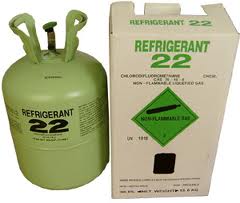
What is R22 and how to replace it

This article discusses the biggest change ever to affect the air conditioning and refrigeration industry. Under EC Ozone Regulation member states have obligations to halt damage to the ozone layer by phasing out ozone depleting substances. The process began in the 1990s and largely concludes at the end of 2014. This article specifically discusses one of the most commonly used refrigerant gases that is being phased out – R22.

Why is R22 being phased out?

What is R22Systems using modern refrigerants use approximately 40% less energy to heat and cool than older systems using refrigerants such as R22. Also, R22 refrigerant is proven to directly deplete the ozone and hence is bad for the environment.

So there are very good reasons for moving away from this and similar gases. In fact, since 2010, new European legislation prevents any new supplies of this gas from being made, leaving only a declining supply of recycled gas available for air conditioning servicing and repairs. At the end of 2014, you will no longer be able to use even recycled stocks in air conditioning systems. Therefore, air conditioning equipment using R22 after this date will be classed as ‘Not Serviceable’. Even before this date, they are becoming increasingly costly to repair, with both reclaimed R22 and spares being harder to obtain and at higher prices.

The problems with modern refrigerants:

Despite the energy efficiency and ozone benefits of modern refrigeration gases, they do have two major flaws:

  1. Although they do not contribute to depletion of the ozone layer like R22, they still contribute to global warming if not closely controlled. This is why F-Gas regulations were introduced to enforce safe use of these refrigerants, preventing discharge of potentially harmful gases into the atmosphere. Amongst other things, these regulations stipulate mandatory maintenance records for refrigerant plant.
  2. Secondly, and the main reason for this article, modern refrigerants cannot be easily retro-fitted into older refrigeration equipment. The properties of these gas do not closely resemble R22 in terms operating temperatures and require major changes to equipment in order to operate.


So what are my R22 replacement options

Businesses with equipment using R22 refrigerant should begin to plan its phase out now – it is not optional. There are a number decision factors to consider:

Plant Age - an old plant should be replaced, but a young plant might be suitable for modification to an alternative refrigerant. If a plant is already relatively old e.g. >15 years, then plant replacement is likely to be the best option.
Performance – if the plant is known to be inefficient, unreliable or unsuited to the current and future cooling loads then plant replacement is likely to be the best option.
Plant design – some plants are not well suited to refrigerant replacement. You should seeks specialist advice.

Option

Pros

Cons

Replace R22 Plant

  • New plant can be designed to have best energy efficiency.
  • Quick pay back in terms of reduced energy bills.
  • New plant can meet your current and future cooling requirements and use the latest technology.
  • New plant will have 20 to 30 year life.
  • Most expensive option in terms of first cost. Can be minimised in some cases by using existing piping
  • Longest implementation time.

Modify R22 Plant to new refrigerant

  • Fairly quick implementation.
  • Probably much lower capital cost than replacement plant (approx 80% less).
  • Efficiency might get worse (up to 10%).
  • Cooling capacity might fall
  • Not applicable to all plant designs.
  • Some risks of reliability problems and leaks.
  • Plant life not being extended

Continue with existing plant using recycled R22 refrigerants

  • Easy zero capital cost option.
  • Avoids being an “early mover”
  • You can benefit from experience gained on other conversions.
  • New technology options could enter the market prior to 2014.
  • Efficiency not being improved.
  • This Option only delays your response – Option 1 or 2 must be adopted by the end of 2014.
  • There is no guarantee of recycled R22 gas being available at reasonable cost.

 What is involved in modifying R22 Plant to new refrigerant?

A number of refrigerant gases have been specifically designed to aid the transition to modern highly efficient gases. These are ‘blended’ gases that have properties that very closely resemble older gases such as R22. Although these gases don’t have the ozone depleting implications of R22, they also don’t have the energy efficiency benefits of modern gases. They are simply intended to extend the life of existing equipment beyond the ban deadline.

R22 replacement gases

R22 replacement for ….

R417a(DuPont™ ISCEON® MO59)
  • Small A/C (<15kW) systems with a capillary
  • In direct expansion stationary air conditioning
  • Medium temperature refrigeration systems
R422D
(DuPont™ ISCEON® MO29)
  • High, medium and low temperature refrigeration
  • Air conditioning and water chiller systems
  • Selected ‘flooded’ applications
R422A
(DuPont™ ISCEON® MO79 )
  • Cold stores and ice rinks
  • Blends in low-temperature commercial and industrial direct expansion refrigeration systems.
  • Can also be used for medium temperature systems)
R424a
(RS-44)
  • Mobile refrigeration, beverage coolers, water coolers, walk-in coolers
  • Also replaces R411B, R415A and R418A.
R438a
(ISCEON® MO99)
  • Designed specifically for DX water chillers with capacity critical Thermostatic Expansion Valves
  • Gives a satisfactory performance in the majority of DX water chillers.

How the Governments “Green Deal” affects UK businesses

Currently, a quarter of the UK’s carbon emissions come from our businesses, industry and workplaces. So the Green Deal is the latest environmental initiative from the British government. It aims to encourage domestic and business energy users to reduce their energy consumption by installing energy efficient measures such insulation, air conditioning heat pumps,  condensing boilers to name a few.

Although the Green Deal is being launched in October 2012, the Government has confirmed that many businesses will be unable to take advantage of the Green Deal loan scheme. A spokeswoman for the Department of Energy and Climate Change (DECC) has said that “the Green Deal for businesses would be delayed because the requirements for commercial properties would be more complex than for domestic buildings”. DECC has not yet set a date for the launch of the business element of Green Deal, however the spokeswoman suggested “it would happen shortly after the domestic loan scheme”.

 The Green Deal philosophy:

Under the Green Deal, bill payers (tenants and owner occupiers) will be able to install energy efficiency improvements without having to front up the cash. Instead, businesses will provide the capital, getting their money back via the energy bill. At the heart of the offer is a simple rule: estimated savings on bills will always equal or exceed the cost of the work.

Will it become a regulatory requirement?

The Government paper “The Green Deal”  (section 2.1.3) suggests that “It is important that the sector has the opportunity to make voluntary improvements first, and that regulation is only deployed if necessary to improve the energy efficiency…”. It goes on to suggest that secondary legislation would be required to force owners and landlords to make energy improvements and the earliest date regulations could come into force is April 2015.

The paper then goes onto say that the Government are proposing powers to require landlords to bring their property up to a defined threshold before it can be rented out again. They caveat this by saying “subject to there being no up-front financial cost to landlords”.

The Governments view seems to be that commercial rented properties change hands relatively frequently, and so this condition would catch most properties. Landlords with the worst performing commercial properties would have to complete a Green Deal assessment and then implement a sufficient number of the cost-effective improvements identified to bring the energy performance of the property up to the threshold. If insufficient cost effective improvements were found, the landlord would still have to implement all of them but would not be required to meet the minimum standard.!

 How will it all work in practice?

As I mentioned earlier, the government appears to need more time refining exactly how the Green Deal will work for businesses, but I would expect it to be along the following this lines (also diagram at the end of this blog):

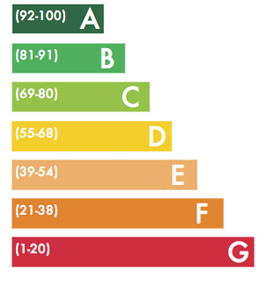
Property assessments: One of the prerequisites for a Green Deal plan will be for the consumer to have a property assessment by an accredited adviser. The adviser would visit to assess the energy performance of the property and advise on the relevant opportunities for energy efficiency improvements.  Yes, this all sounds a bit like the current EPC (Energy Performance Certificate) and it appears likely that the Government will use an improved version of the EPC for the purposes of Green Deal assessments.

Make recommendations: Assessors will make recommendations drawn from a list of energy improvement measures which have been approved for the Green Deal. These measures will include a corresponding list of products, materials and specification standards in the form of a Code of Practice. It seems this Code of Practice will be essential to ensure there is no conflict of interest between assessors and Green Deal Providers. Despite this, I can’t help thinking this is a potential area for unfair or misleading selling practices, but we will have to see!.

Green Deal Providers quote for the work: the Green Deal Provider would consider the package of measures and make an offer which stipulates the total cost, the charge to be attached to the energy meter, and the length of the repayment period.

 Arrange financing: Consumers will be free to finance work as they wish, and some people may opt to pay for the work upfront, in whole or in part. But what the Government hopes will make the Green Deal attractive is the opportunity to repay through energy bills, spreading the cost and enabling the obligation to repay to be passed on to future occupiers.

I could also write a long blog on this subject alone and still not cover it properly. But I will close this section by saying the Government appears to want to encourage a wide range of financial institutions and High Street names into offering Green Deal finance.

Install the energy improvement measures: Certification of installers will be an essential element of this, as work will be undertaken by a range of trades people. The proposed standards and certification framework is intended to ensure that all work is completed to a recognised standard and that consumers can expect the same level of customer care and protection regardless of the installer. The Government appears to be suggesting the energy improvement providers will need to qualify and carry a quality logo similar to existing marks such as Gas Safe and Trustmark.

Repayments: When the Green Deal installer has completed the work, they will inform the Green Deal provider (if it is a separate organisation) who will arrange for details about the Green Deal to be included in an updated EPC or other appropriate document and lodged on the EPC or equivalent database. The Green Deal provider would also pass the relevant details to the customer’s energy supplier. Following verification by the energy supplier, which would give the customer the right to query any details, the Green Deal charge would appear on the next energy bill received by the customer.

 the green deal


We are listed in the following top directories;
Free Web Directory